
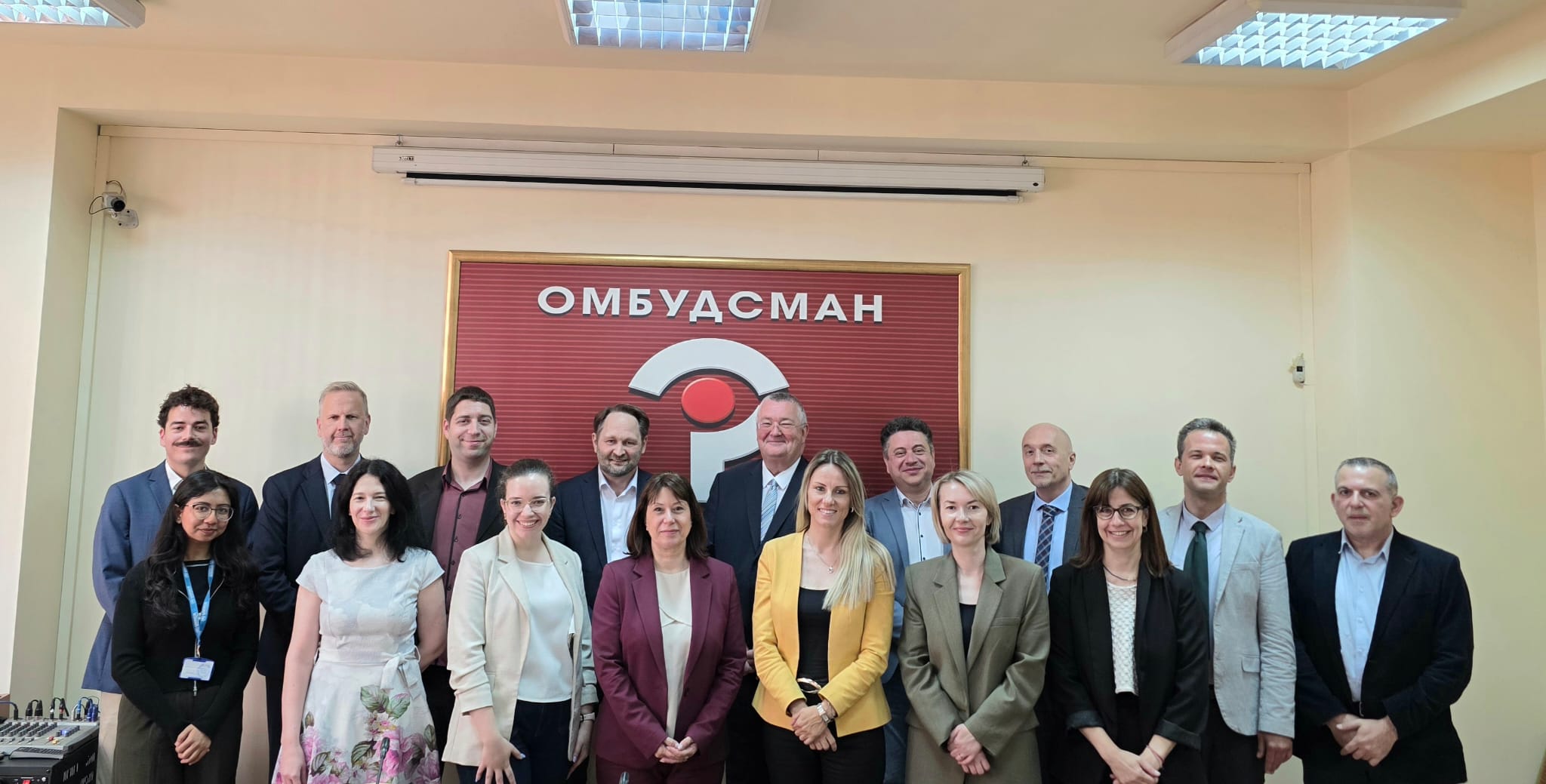
Participants in the first 2026 meeting of the Network of National Preventive Mechanisms of Southeast Europe adopted a final declaration calling for the detention of migrants to be used only as a measure of last resort and in strict compliance with international human rights standards.
The document emphasizes the need for effective and humane alternatives to detention, safeguards against arbitrary and prolonged deprivation of liberty, as well as ensuring access to legal aid, interpretation, healthcare, and effective judicial review. Participants expressed serious concern regarding cases of prolonged detention where there is no realistic prospect of removal or forced return.
“The protection of human dignity cannot be made conditional. The management of migration processes must be based on the rule of law and the guarantee of fundamental human rights. Prolonged detention without a realistic prospect of return creates a risk of disproportionate restriction of liberty and raises questions regarding compliance with international standards,” stated the host of the forum, Ombudsman Velislava Delcheva.
Over the course of two days, she hosted the first meeting of the year of the Network of National Preventive Mechanisms of Southeast Europe, which was held at the Ombudsman institution.
The forum was attended by representatives of the United Nations High Commissioner for Refugees (UNHCR), the European Border and Coast Guard Agency (FRONTEX), the Council of Europe, as well as representatives of national preventive mechanisms and ombudsman institutions from Austria, Bosnia and Herzegovina, Croatia, Cyprus, Greece, Montenegro, Serbia and Slovenia.
The main topic of discussion was “Protection of the Fundamental Rights of Detained Migrants – Challenges and Solutions. Alternatives to Detention and Forced Return to the Country of Origin.”
During the meeting, participants exchanged good practices and expert experience related to the monitoring of detention facilities, accommodation conditions for migrants, and mechanisms for preventing inhuman and degrading treatment.
As part of the program, the delegates visited the Special Home for Temporary Accommodation of Foreigners in Sofia under the Migration Directorate of the Ministry of Interior, where they familiarized themselves with the conditions in the center and discussed the practical challenges faced by the institutions.
In conclusion, the participants reaffirmed their readiness to continue strengthening regional cooperation and promoting migration management policies based on human rights and the rule of law. The focus of their next meeting this year will be the topic of juvenile justice and children in conflict with the law.
Please refer to the Download section to access the documentation.